01From a one-day prototype to our flagship app
Context
Neurolabs
Product
ZIA Lens
Year
2026
Role
Product design lead
Team
Me and a QA engineer, with our mobile developer on the SDK integration. An iOS contractor now builds on my v1.
Practice
Journey mapping · 0 to 1 · AI-assisted building · iOS · Service design · Working with engineers
TL;DR
ZIA Lens is the successor to ZIA Capture, our first app, and is now our flagship. I built the first prototype in a day with AI-assisted coding on top of our real API, which proved it was worth building. Most of v1 was connecting systems outside the app, which I had already mapped, so we decided the fastest way to clients was for me to build the scrappiest version that connected it all, in July and August. A dairy brand in Mexico has used it every week since September, and an iOS contractor is now taking it up to production standard.
Problem
We’re an image recognition service that helps consumer packaged goods brands see how their products are doing on supermarket shelves.
Our main product has been an API. Clients send us shelf images and we return structured JSON describing what’s on the shelf. That works for big companies with data and intelligence teams, but it has two gaps:
- Integration is slow. Clients see the value in months rather than in days or weeks from first contact.
- Raw data isn’t enough for everyone. Mid-size companies don’t usually know what to do with it or how to get the best insights from it.
So we wanted our own data capture app that would take clients from collecting the data to getting insights, without them having to build anything.
Outcome
A dairy brand in Mexico got the app at the beginning of September and started using it a week later.
In three weeks, 10 of their users captured more than 200 images across stores in Mexico City.
They didn’t need an API integration at all, because we show them all their data in a dashboard every day.
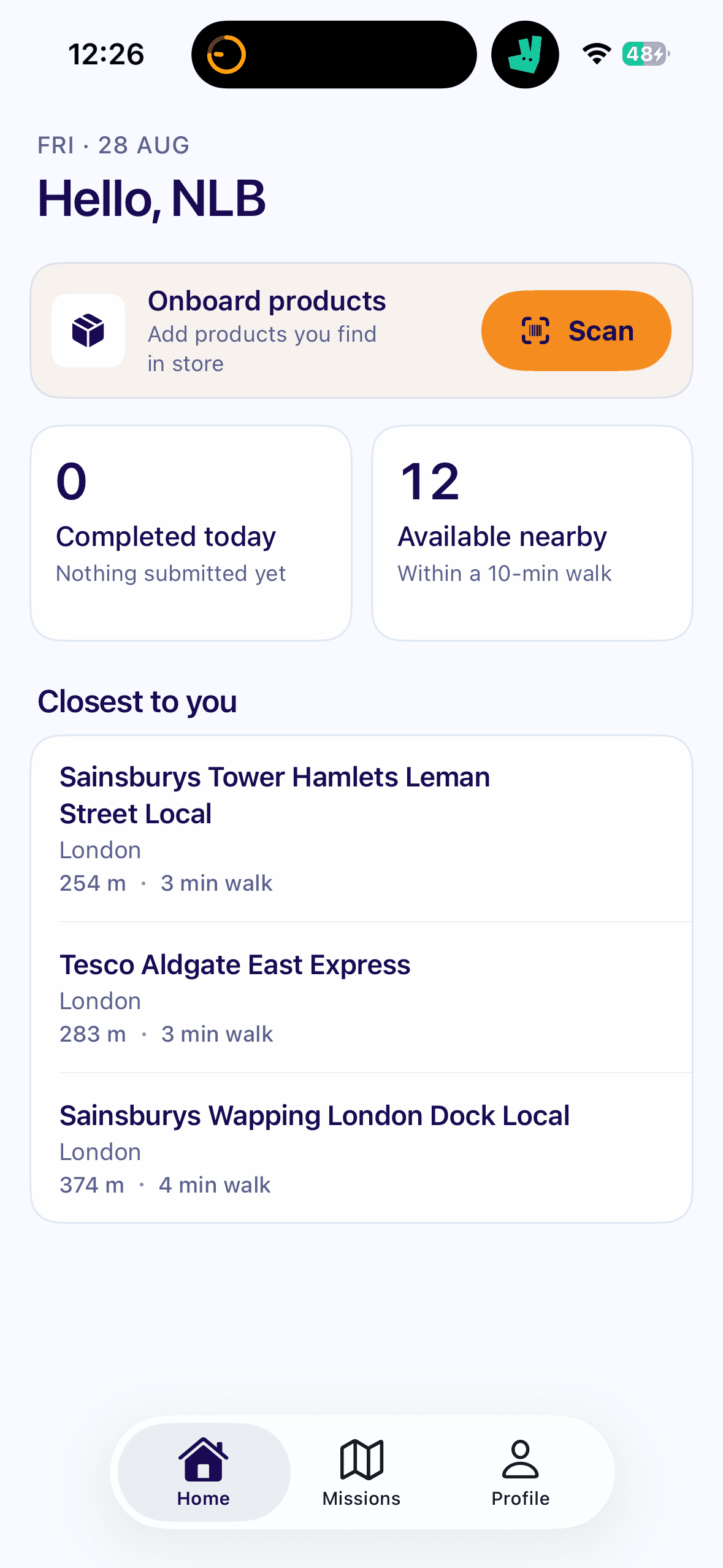
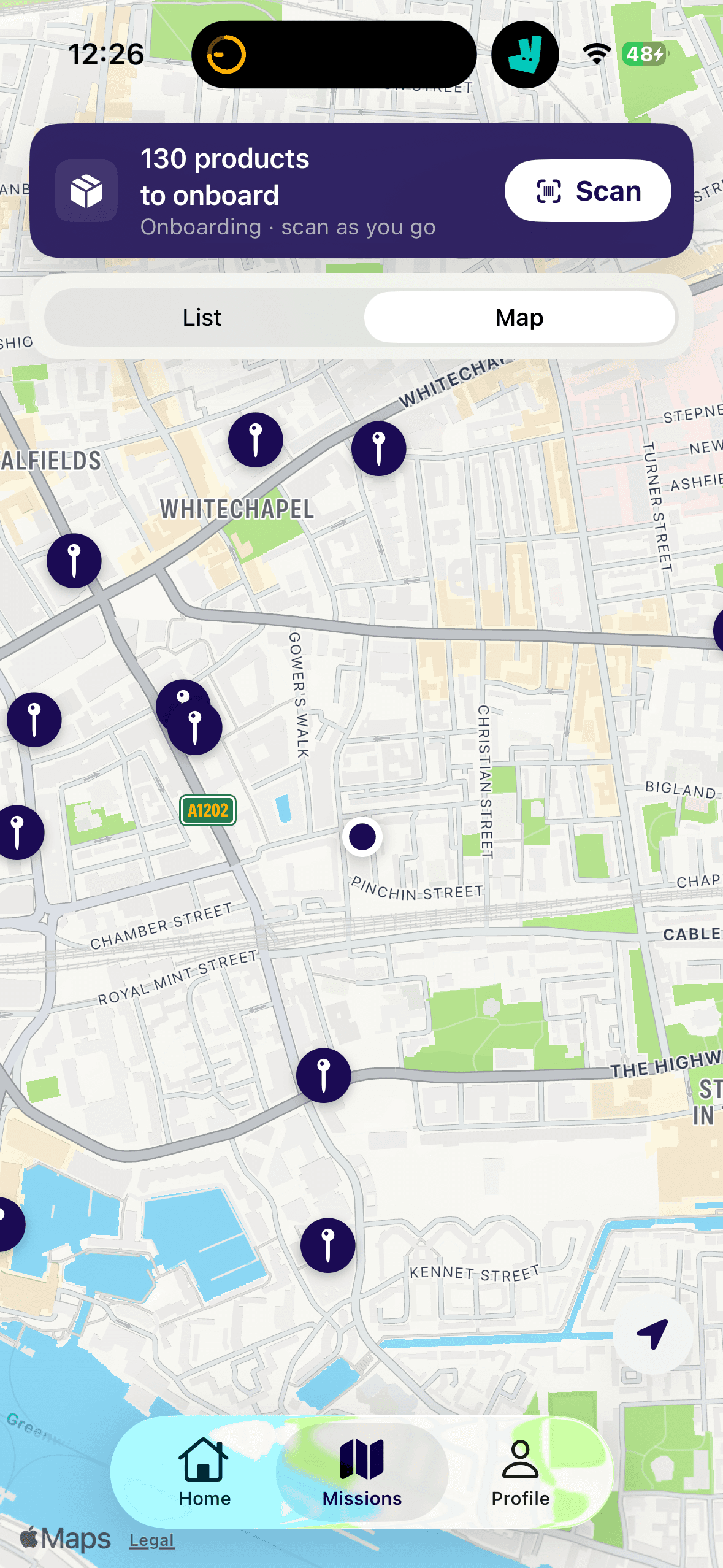
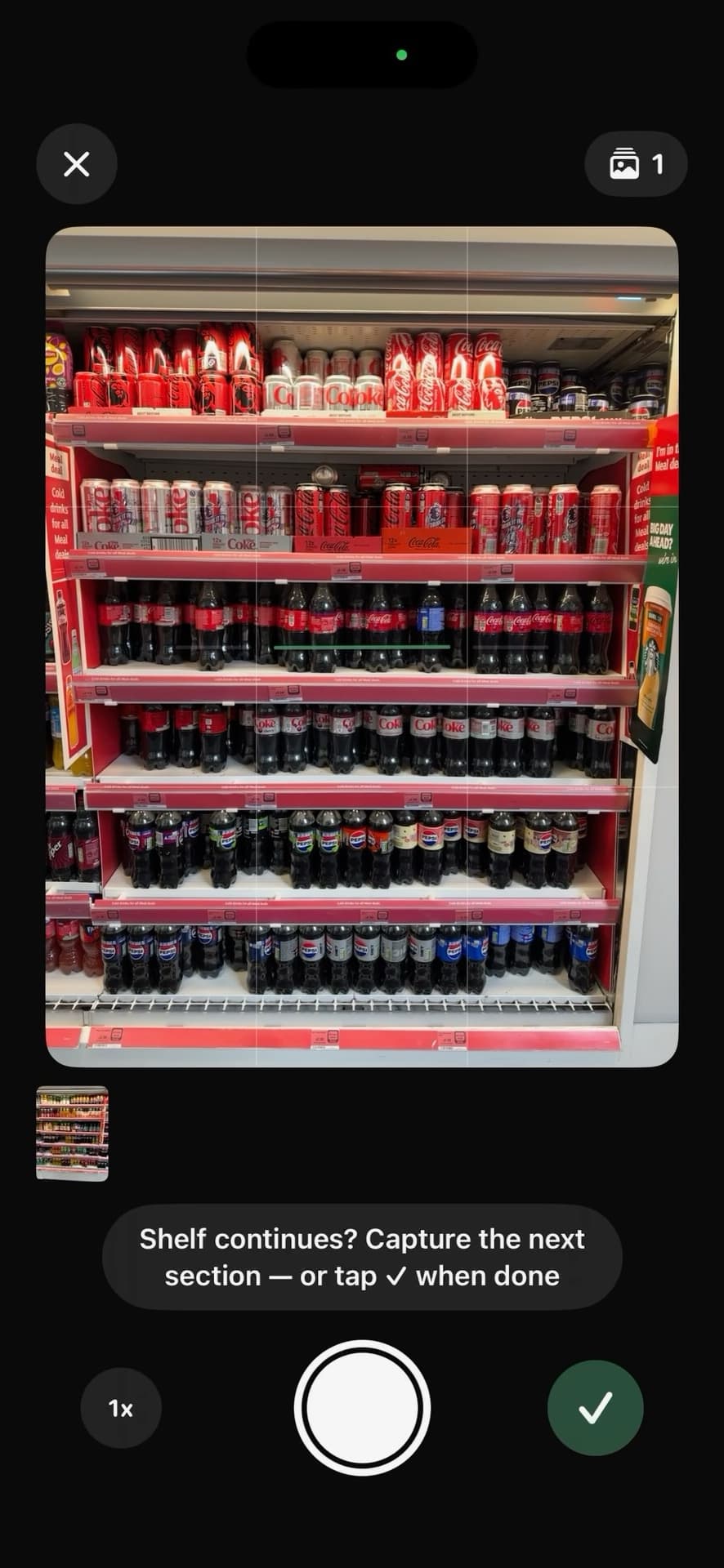
Building it was fast. In a day I had a bare-bones app working end to end with real data. You could see missions on a map, claim them, and take and upload photos with a rough camera. The only backend change I needed was enabling Firebase authentication on our API, which was a one-day ticket.
Building it also showed how much setup our backend needed before it could take in images for a new client, and none of it was written down. I wrote a runbook by trial and error and by asking engineers and the team, so anyone can now set up a new organisation for the next prospect.
Once it was in clients’ hands, we hired an iOS contractor to take my v1 up to production standard, from handling patchy connections in stores to hardening the code, building on my designs and decisions.
Full case study in progress. Happy to walk you through it in the meantime: camilogiraldo31@gmail.com